
How do I size a home battery for my house?
Knowing how to size a home battery comes down to one thing. The loads you want to keep running decide it, not the floor area of the house. Sizing from square metres is the most common mistake we see. List the appliances you want alive during an outage. Add up their running watts, then multiply by the number of hours you need them. That gives you a kilowatt-hour figure you can match directly against a product range.
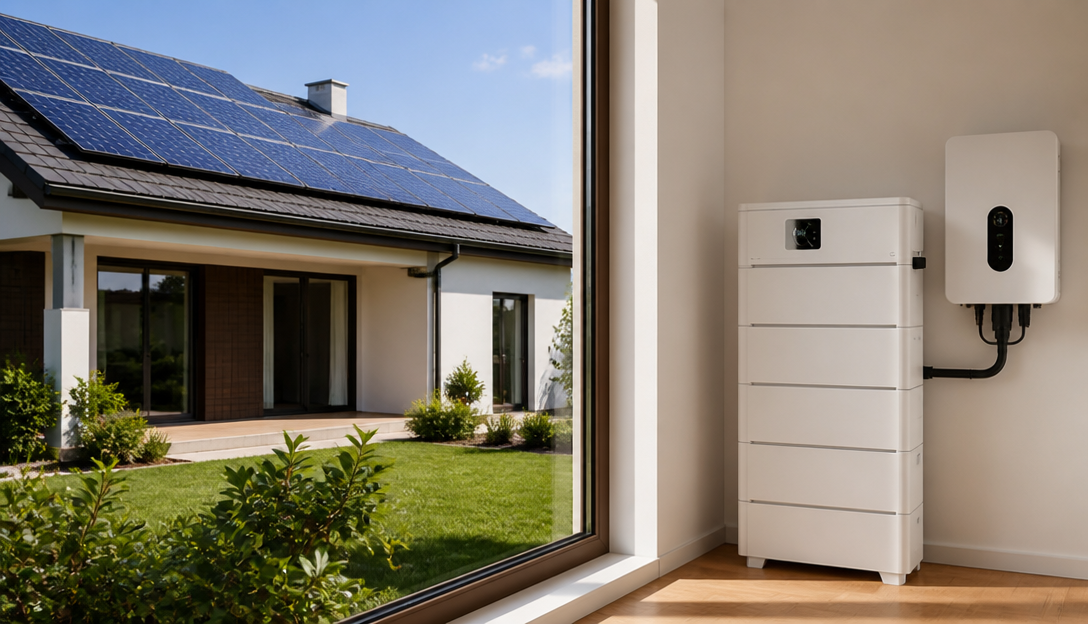
How to size a home battery from a load list
Start with the essentials: fridge, lighting, Wi-Fi router and phone charging. Write down the running watts of each. A well pump, sump pump, gas boiler or air conditioning unit will dominate the total. Decide early whether those are in scope, or whether they stay on the grid.
Multiply the total by the number of hours you want to cover. Then add a margin for conversion losses in the inverter. That result is your usable capacity — the figure home battery sizing turns on. Battery ranges come in usable kilowatt-hours, so you can compare your figure against the options without converting anything.
Matching your figure to real capacities
RUIDASIMAI covers the residential range in three formats, and home battery sizing usually starts with the smallest that fits. Wall-mounted units come in 5 kWh, 10 kWh and 16 kWh and suit homes where floor space is tight. Floor-mounted all-in-one cabinets use the same 5, 10 and 16 kWh capacities. Stackable systems start at 10.24 kWh with two 5.12 kWh modules and scale to 30.72 kWh with six.
Two practical checks before you commit. First, confirm the units support parallel expansion. Our units run up to 64 in parallel, so a small install today can grow later. That keeps home battery sizing flexible. Second, check your inverter’s continuous charge and discharge current against the battery. The inverter, not the battery, is usually the limiting component.
When to let an engineer confirm the number
Load lists are easy to get wrong in two places: motor start-up currents and seasonal peaks. A pump that draws a few hundred watts when running can pull several times that for a moment at start-up. If your list includes motors, heating or a well pump, send it to us. Our engineers will confirm the home battery sizing rather than leaving it to a spreadsheet.
Battery sizing tables and datasheets for every model — useful for anyone sizing a battery bank — are on our resources page. Background reading on household energy use is available from the U.S. Department of Energy Energy Saver programme. When your load list is ready, contact us and we will size the system with you.
Questions about anything on this page?
Send us your load list, your inverter model or a photo of the nameplate. Our engineers review the details and confirm what fits your site.
- Single-line diagram or load schedule
- Inverter make and model
- Photo of the nameplate or your existing battery
Prefer email? Write to admin@rdsmod.com