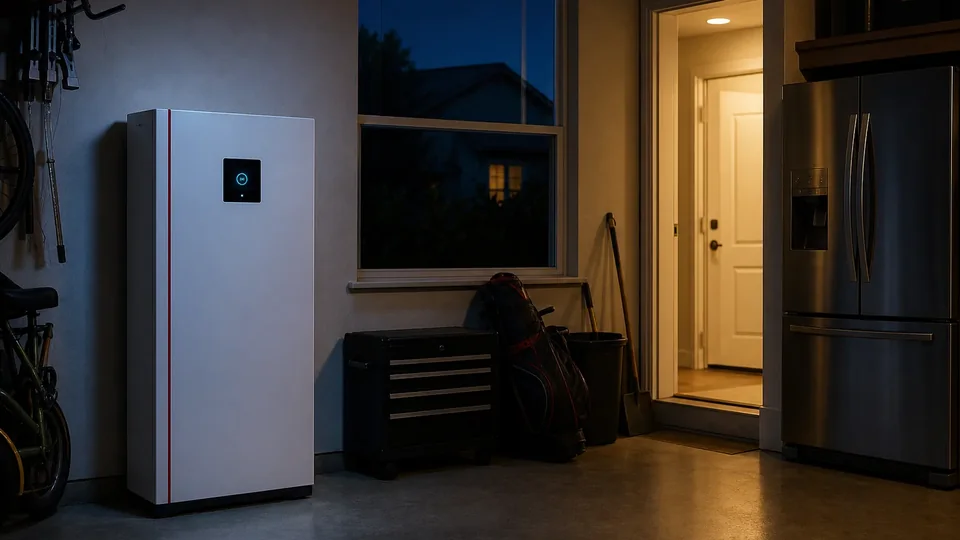
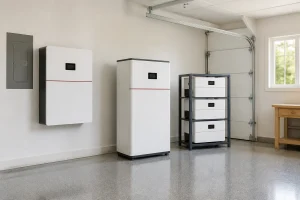
LFP vs NMC is a key comparison when choosing a home energy storage battery. LFP, or lithium iron phosphate, is known for strong thermal stability and cycle durability. NMC, or nickel manganese cobalt, generally offers higher energy density and a more compact battery design.
For residential energy storage, LFP is now widely used in stationary applications. NREL’s 2024 Annual Technology Baseline identifies LFP as the primary lithium-ion chemistry for stationary storage, while NMC remains a commercial option where higher energy density is important.
The right choice depends on more than chemistry. Buyers should also consider usable capacity, power output, cycle life, installation space, operating temperature, safety requirements, warranty, certification, and total system cost.
LFP vs NMC: Quick Comparison
| Factor | LFP | NMC |
|---|---|---|
| Full name | Lithium iron phosphate | Nickel manganese cobalt |
| Energy density | Generally lower | Generally higher |
| Thermal stability | Generally higher | Generally lower |
| Cycle durability | Generally higher | Generally lower |
| Physical footprint | Usually larger | Usually smaller |
| Stationary storage | Widely used | Also used |
| Main advantage | Durability and stability | Energy density |
| Main trade-off | More space per kWh | More thermal-management considerations |
These are general chemistry-level differences. Actual battery performance also depends on cell quality, BMS settings, operating temperature, depth of discharge, charge and discharge rate, thermal management, and system design.
1. Safety and Thermal Stability
For a home battery, chemistry is only one part of the safety equation.
LFP generally has stronger thermal stability than NMC. This characteristic has contributed to its growing use in stationary energy storage. However, an LFP battery is not automatically safe simply because it uses LFP cells.
A complete residential battery also depends on:
- Cell quality and consistency
- Battery management system (BMS)
- Overcharge and over-discharge protection
- Temperature monitoring
- Current protection
- Thermal management
- Module and pack construction
- Enclosure design
- System-level testing
UL Solutions describes UL 9540A as a test method for evaluating thermal runaway fire propagation in battery energy storage systems.
Therefore, buyers should evaluate the complete battery system rather than relying on the chemistry name alone.
Buyer check: Ask for applicable system certifications, safety test documentation, BMS protection functions, and installation requirements.
2. Cycle Life and Daily Cycling
Cycle life matters because many home batteries charge from solar during the day and discharge at night.
LFP generally has an advantage in cycle durability, making it well suited to frequent charge and discharge operation. NMC can also support residential storage, but its cycle-life characteristics depend heavily on the specific cell and operating conditions.
 Actual battery life depends on:
- Depth of discharge
- Charge and discharge rate
- Operating temperature
- State-of-charge range
- Cell quality
- BMS settings
- Thermal management
- End-of-life capacity requirement
A cycle-life claim such as “6,000 cycles” is therefore incomplete without test conditions.
A better procurement question is:
How many cycles are guaranteed under the specified operating conditions, and what capacity remains at the end of those cycles?
For daily solar storage, that information is more useful than a headline cycle number.
3. Energy Density and Installation Space
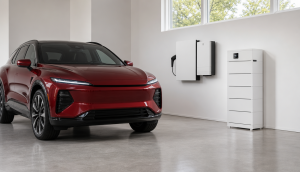 NMC generally provides higher energy density than LFP.
This means an NMC battery can potentially deliver the same nominal energy capacity in a smaller physical package. That can be useful when a home has limited installation space.
LFP generally requires more physical volume for the same nominal energy capacity.
However, energy density does not have the same importance for every residential installation.
If a homeowner has sufficient garage, utility-room, basement, or outdoor equipment space, the larger physical footprint of LFP may be acceptable.
If installation space is highly constrained, NMC’s higher energy density can become more important.
A simple way to frame the decision is:
Limited space → energy density becomes more important.
Adequate space → cycle durability, safety design, warranty, and total cost can receive more weight.
This is why buyers should compare the complete battery dimensions and usable capacity rather than only the cell chemistry.
4. Cost and Total Ownership
The initial price per kWh does not tell the whole story when comparing LFP vs NMC.
A residential energy storage system includes more than battery cells. Total project cost can include:
- Battery cells and modules
- BMS
- Inverter
- Thermal management
- Enclosure
- Electrical protection
- Installation
- Permitting
- Certification
- Monitoring and communications
NREL’s residential battery model separates battery costs from other system components and installation-related costs.
As a result, two batteries with the same nominal capacity can have different total installed costs.
For an apples-to-apples comparison, buyers should check:
| Specification | What to compare |
|---|---|
| Capacity | Nominal and usable kWh |
| Power | Continuous and peak kW |
| Efficiency | System or round-trip efficiency |
| Cycle life | Conditions and end-of-life capacity |
| Warranty | Years, cycles, and capacity retention |
| Installation | Included or excluded |
| Certification | Requirements for the target market |
| Total cost | Complete installed system |
The more useful economic question is not simply “Which battery costs less?”
It is:
“What is the cost of the required usable energy over the expected service life?”
5. Cold-Weather Performance
Temperature affects battery performance regardless of whether the system uses LFP or NMC.
For cold-weather installations, buyers should check the manufacturer’s actual charging and discharging limits instead of relying on a general statement about chemistry.
Important specifications include:
- Minimum discharge temperature
- Minimum charging temperature
- Maximum operating temperature
- Charging behavior at low temperatures
- Integrated battery heating
- Temperature monitoring
- BMS temperature protection
- Warranty conditions
Charging restrictions can become especially important at low temperatures.
Therefore, a battery installed in a cold climate may require an integrated heating strategy or another thermal-management solution.
The important specification is the system’s operating temperature range, not simply whether the chemistry is described as suitable for cold weather.
6. Application and System Design
The intended application should determine the battery requirements.
Home energy storage can support:
- Solar self-consumption
- Time-of-use energy shifting
- Backup power
- Whole-home backup
- Partial-home backup
- Peak-demand management
- Off-grid applications
These use cases place different demands on the battery.
For example, a battery that cycles every day with solar PV places greater emphasis on cycle durability. A battery installed in a small utility area places greater emphasis on energy density and physical dimensions.
Power capacity also matters.
A 15 kWh battery does not necessarily provide the same backup capability as another 15 kWh battery. One may provide higher continuous power, while another may be designed around longer-duration energy delivery.
NREL’s residential storage model considers both power and energy capacity, reinforcing the need to evaluate kW and kWh together.
The practical question is therefore:
Which chemistry and system configuration meet the required energy, power, installation, temperature, safety, and service-life requirements?
LFP vs NMC: Which Fits a Home Battery?
LFP is commonly considered for residential storage when the priorities include:
- Frequent daily cycling
- Long cycle durability
- Thermal stability
- Stationary solar storage
- Long-term energy storage
NMC can be considered when the priorities include:
- Higher energy density
- Smaller physical footprint
- Space-constrained installation
- Compact energy storage
Neither chemistry should be selected from the name alone.
The specific cell, BMS, thermal design, system architecture, warranty, certification, and manufacturing quality can materially affect the final battery’s performance.
NREL’s current residential storage analysis includes both LFP and NMC while identifying LFP as the primary chemistry for stationary storage.
What Should Buyers Check Before Choosing LFP or NMC?
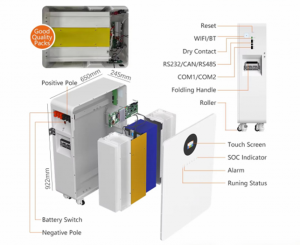 Before purchasing a home battery, ask the manufacturer for these specifications:
- Usable capacity: Confirm usable rather than only nominal kWh.
- Power output: Check continuous and peak power ratings.
- Cycle life: Request the test conditions and end-of-life capacity.
- Warranty: Review years, cycles, capacity retention, and exclusions.
- Temperature range: Check separate charging and discharging limits.
- BMS protection: Verify overcurrent, overcharge, over-discharge, short-circuit, and temperature protection.
- Safety certification: Confirm certifications applicable to the target market.
- Inverter compatibility: Check supported communication protocols and inverter models.
- Installation requirements: Verify mounting, clearance, environmental, and indoor/outdoor requirements.
- Manufacturing quality: Ask about cell testing, matching, traceability, and final inspection.
For U.S. projects, buyers should distinguish between a cell-level certification and certification or testing applicable to the complete energy storage system. UL Solutions identifies UL 9540 as the safety standard for energy storage systems and UL 9540A as the test method for evaluating thermal runaway fire propagation.
How RUIDASIMAI Supports Home Battery Projects
For an OEM or private-label home battery project, choosing LFP or NMC is only the beginning.
RUIDASIMAI evaluates the battery requirement as a complete system, including capacity, power, cell chemistry, BMS, thermal management, enclosure design, communication, operating temperature, certification requirements, and target application.
The engineering approach starts with the intended use and required specifications. The cell chemistry can then be matched to the application’s space, cycling, performance, and operating requirements.
For OEM projects, this approach helps buyers avoid selecting a battery chemistry based only on price or a single datasheet parameter.
Send your target capacity, power rating, application, installation environment, and target market to RUIDASIMAI for an engineering review.
Frequently Asked Questions
Is LFP better than NMC for home batteries?
LFP is widely used for stationary energy storage and generally offers advantages in cycle durability and thermal stability. NMC generally offers higher energy density. The appropriate choice depends on the complete system requirements.
Why is LFP popular for home energy storage?
LFP combines cycle durability and thermal stability with characteristics suited to stationary storage. NREL identifies LFP as the primary lithium-ion chemistry for stationary storage in its 2024 analysis.
Does NMC have higher energy density than LFP?
Generally, yes. NMC can provide higher energy density, which can reduce the physical size required for a given nominal energy capacity.
Which lasts longer, LFP or NMC?
LFP generally has stronger cycle-life characteristics. However, actual service life depends on depth of discharge, temperature, charge and discharge rates, cell quality, BMS settings, and other operating conditions.
Is LFP safer than NMC?
LFP generally has stronger thermal-stability characteristics, but chemistry alone does not determine the safety of a complete residential battery. BMS protection, thermal management, enclosure design, testing, certification, and installation also matter.
What matters most when comparing LFP vs NMC?
Compare usable capacity, power output, cycle-life conditions, capacity retention, temperature range, BMS protection, certification, warranty, inverter compatibility, installation requirements, and total system cost.
LFP or NMC for your home battery?
Tell us your budget, cycle target and installation plan. Our engineers recommend the chemistry that matches your life target and warranty needs.
- Expected cycles per day and years of use
- Installation temperature range at your site
- Budget band and warranty length you want
Prefer email? Write to admin@rdsmod.com