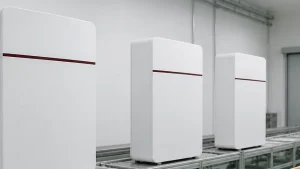
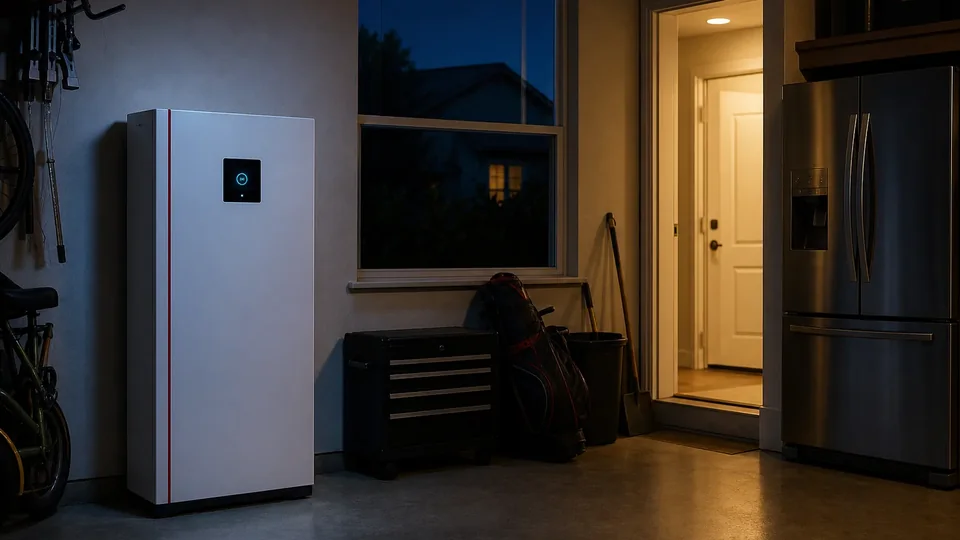
A wall-mounted home battery saves floor space. A floor-mounted unit puts everything in one cabinet. That single-cabinet layout is also the main advantage of a floor-mounted battery: capacity, protection and terminals sit together at floor level, so servicing and later expansion do not involve removing a wall unit. A stackable system lets you add capacity later, without replacing anything. Most houses can host all three. So the right pick comes down to three things: where you have space, how many kWh you need today, and how that number may grow.
This guide compares the three form factors on footprint, capacity, install space and expansion. Every number below comes from published manufacturer specifications. The decision tree near the end matches each form to a room in your house. If you have not decided how much storage you need, run the math in our home battery sizing guide first, then pick the form.
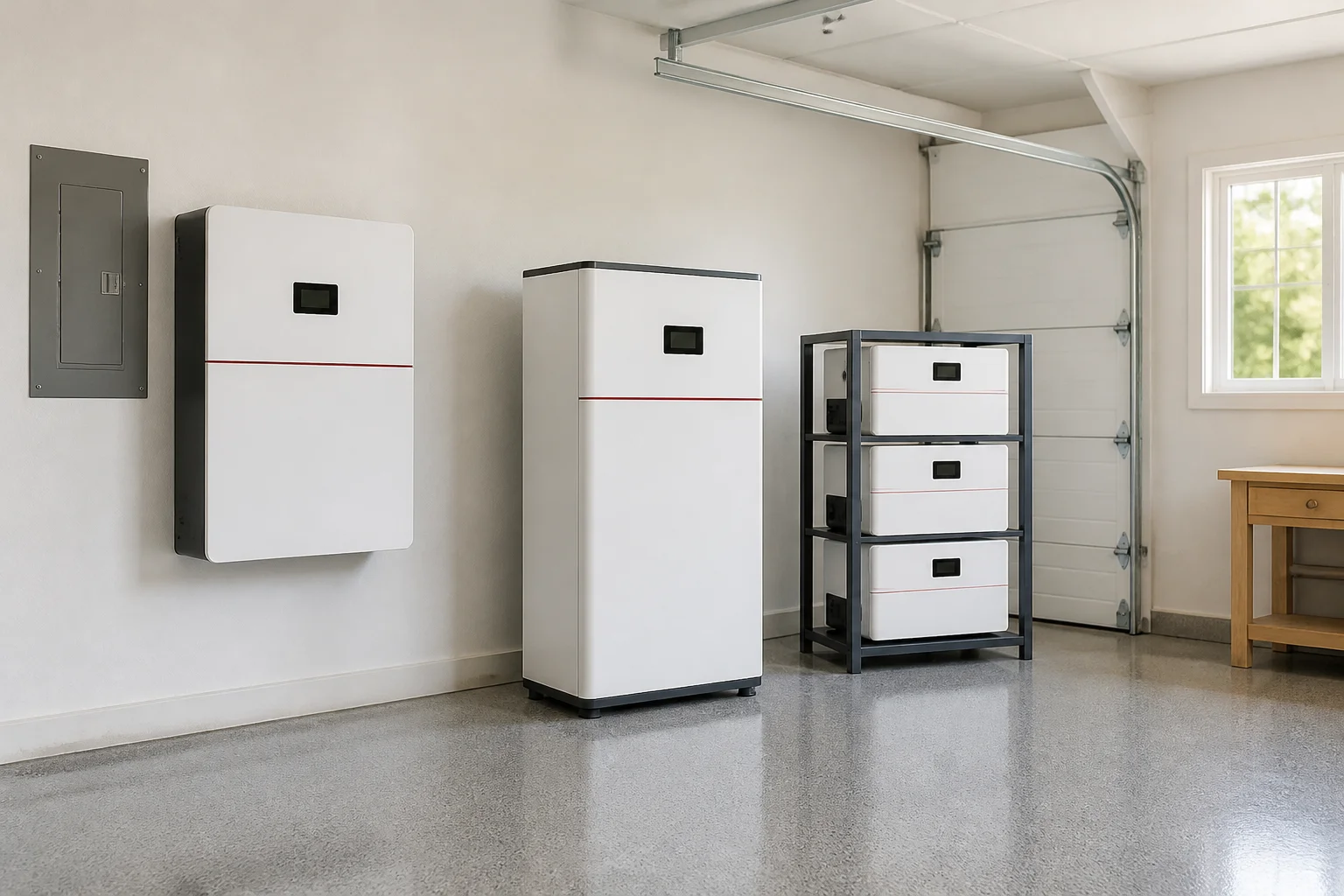
What Are the Three Home Battery Form Factors?
All three forms store the same cells: lithium iron phosphate (LiFePO4) at 51.2 V, in a 16S1P layout. The package changes, not the chemistry. It also changes how much capacity you buy in one step, and where the pack must live. RUIDASIMAI is a residential home battery manufacturer that builds all three forms on this one platform. That is because every series we sell shares the same cells, the same voltage and the same safety stack, so this comparison uses our own published specifications.
Wall-Mounted home batteries
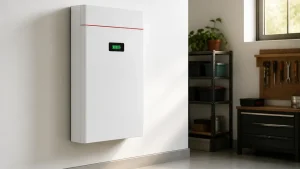
A wall-mounted home battery is an integrated cabinet that hangs on the wall of your garage or utility room. The Wall-Mounted series ships in 5, 10 and 16 kWh sizes. It cools by natural air and shows daily data on an LCD panel. When the cabinet stays off the floor, it suits tight garages and basements with little floor room. In addition, it fits installs near the panel, where short cable runs cut cost. You scale the system by running up to 64 units in parallel. Within this series, the Classic Wall-Mounted Battery offers the standard white cabinet, the Duo-Tone Wall Battery adds a black-frame finish for a bolder look, and the Silver Smart Wall Battery upgrades to a large colour display.
Floor-Mounted home batteries
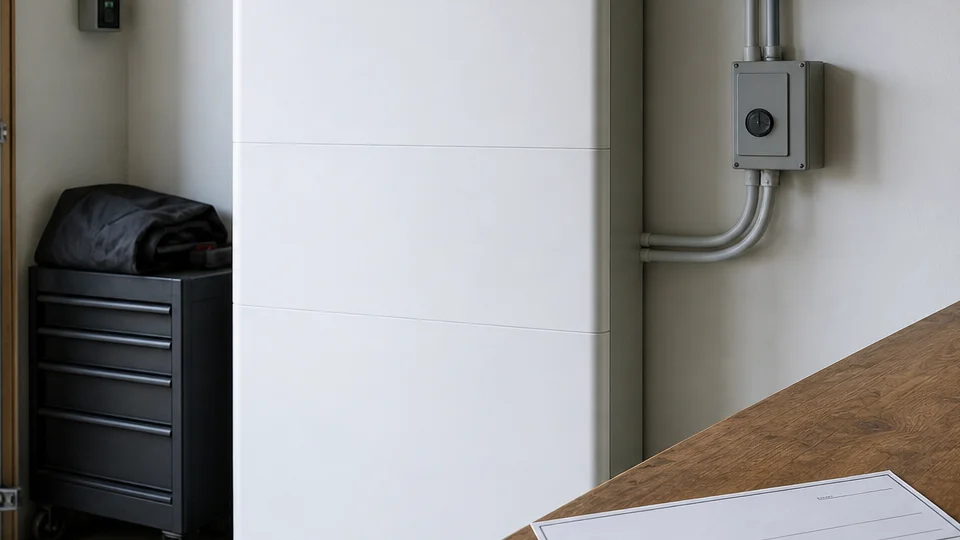
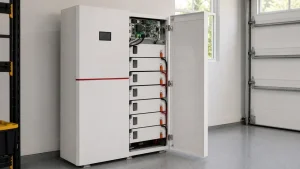
A floor-mounted battery is one floor-standing cabinet. It combines the battery pack, the BMS and the smart control in a single unit. The Floor-Mounted series offers the same 5, 10 and 16 kWh steps. It is built as a plug-and-play package. The spec sheet rates it compatible with 99% of leading hybrid inverters. Since it skips the wall-loading question, it is the default for garages with open floor. It does need a floor footprint and room for airflow. This series spans the All-in-One Floor-Standing Battery for a ready-to-use cabinet, the Rack-Mount Modular Battery for vans, boats and equipment racks, and the Rugged Floor-Standing Home Battery for garages, workshops and outdoor-exposed installs.
Stackable home batteries
A stackable battery is modular. You install one rack, and then add or remove battery modules when needs change. The Stackable series sells 5, 10 and 16 kWh modules. When you buy 2 to 6 modules, the published steps run from 10.24 kWh up to 30.72 kWh. The series allows up to 64 units in parallel. The stacking design adds capacity without extra wiring between modules. If your capacity path is uncertain, this form is built for it. The lineup includes the Classic Stackable Battery with its square-LCD control unit, the Round Display Stackable Battery built for tight spaces, and the Smart Stackable Battery with a black control unit and master breaker.
How Do the Three Home Battery Form Factors Compare?
The table below puts the three forms side by side. Every battery in the table shares one platform. All are LiFePO4 at 51.2 V, with natural air cooling and an LCD display. All carry UL9540 and UL1973 certification, a 5-year warranty, and at least 6,000 to 8,000 cycles at 25°C. The differences, however, are in the package, the capacity steps and the space.
| Spec | Wall-Mounted | Floor-Mounted | Stackable |
|---|---|---|---|
| Battery capacity (one unit) | 5 / 10 / 16 kWh | 5 / 10 / 16 kWh | 5 / 10 / 16 kWh per module |
| System capacity path | Up to 64 units in parallel | Up to 64 units in parallel | A 2 to 6 module stack reaches 30.72 kWh; up to 64 units in parallel |
| Package | One battery cabinet, wall-hung | One cabinet with BMS and control, floor-standing | Modular battery modules on a rack, no extra wiring |
| Space it needs | Wall area plus a strong wall | Floor footprint plus clearance | A vertical column of rack space |
| Adding capacity later | Mount and parallel more units | Stand up and parallel more units | Add one module to the stack |
| Best for | Tight floors, runs near the panel | The simplest integrated install | Growing capacity, 16 to 30+ kWh |
What the table tells you
In short, two points stand out. First, the electrical platform is identical, so you choose a package, not a new technology. Second, the stack is the only form where more battery capacity is a small local change: one extra module on the rack, and no new cabinet.
Which Form Factor Fits Your House? A 5-Step Decision Tree
To begin with, work through the five questions in order. The first match is your form. Each step is tied to a room you already have.
- Your main spare space is a floor-tight garage or basement? Start on the wall. A wall-mounted home battery keeps the floor clear for cars, tools and storage. A short run to the panel also cuts cable cost. Pick the 5, 10 or 16 kWh step from your sizing math.
- You have open floor and want the simplest install? Choose floor-mounted. One integrated battery cabinet, no wall-loading call, and broad inverter fit make it the lowest-friction install of the three.
- Your capacity target is above 16 kWh? Choose stackable for the battery system. The published steps reach 30.72 kWh in one 6-module stack, and parallel units go beyond that. As a result, the form does not cap your end goal.
- You plan more solar, an EV charger, or a second home soon? Choose stackable. Each of those plans raises the kWh number your battery must store later. In the long run, adding a battery module is cheaper and faster than mounting a new cabinet.
- You want backup plus daily savings in a fixed size? Pick the battery form by space: wall or floor, take the step that matches your sizing result, and stop optimizing. All three forms share the same cells, cycles and warranty, so a good-enough fit is a correct answer.
If you are still unsure, the gap between the two close forms is the room, not the battery. When you measure the wall or the floor spot, let that decide.
What Each Form Actually Needs in Your Home
All three series cool by natural air and carry an LCD display. Three conditions matter for every battery form: airflow clearance, service access, and a spot near the panel and inverter. Each form adds one more requirement.
Wall-mounted. The wall must hold the battery cabinet. For instance, concrete block is the easy case. While framed walls may need reinforcement, proper anchors solve most loads. At the same time, you need the vertical wall run itself, plus front clearance for the door and connectors.
Floor-mounted. You need a floor footprint with clearance on the cooling side. A heavy integrated battery wants a solid, level floor. Basements and garages are the usual spots. Fewer parts to mount is why it is the common default for standard installs.
Stackable. You need a vertical column of rack space for the battery, about as tall as your final stack, with room to slide in a new module later. Plan the column for the end state rather than the first module. That is the whole point of the form. Local electrical rules and NFPA 855, the national standard for installing stationary energy storage systems, set where a cabinet may go. In practice that means a garage or utility room, with a licensed electrician making the final call and handling permitting.
Can I Change Form Factors Later?
Due to the shared 51.2 V LiFePO4 platform, a switch later means replacing the battery, rather than redesigning the system. Your inverter, panel work and wiring stay largely intact. However, the one-way street runs the other way. A small fixed battery plus a later 30 kWh wish forces new cabinets and a new install. A stack starts small and grows in place. So if capacity is the uncertain part, the stackable form removes that risk at the design stage. For the numbers side, see our guide to home battery capacity. For the brand landscape, our best home batteries of 2026 ranks seven systems on cost per kWh.
Frequently Asked Questions
Is a wall-mounted home battery enough for whole-home backup?
Yes, as long as the size matches the load. A 10 or 16 kWh wall-mounted battery can carry essential loads through a typical outage when the backup list is sized right. The wall form does not limit output; it limits what one wall can hold. If the math needs more, you parallel up to 64 units. That is a system design call, not a wall-strength call.
What is the largest capacity a stackable home battery system supports?
The published stack steps from 10.24 kWh with 2 modules up to 30.72 kWh with 6. The series rating allows up to 64 units in parallel beyond that. Most homes land between 10 and 30 kWh, so one rack and one stack cover them. That means no second install visit.
Which form factor is the easiest to install?
For most garages, the floor-mounted battery. It is one integrated unit with the BMS and control already inside. The spec sheet rates it compatible with 99% of leading hybrid inverters, since the BMS and control are built in. There is no wall check, no rack, and no module handling. A wall mount adds a structural check, and a stack adds a rack, but both are routine for a licensed installer.
Do the three form factors use the same battery chemistry?
Yes. All three series use LiFePO4 cells at 51.2 V in a 16S1P layout. Cycle life is at least 6,000 at 25°C on the base step, and at least 8,000 on the larger steps. All three cool by natural air and carry UL9540 plus UL1973 with a 5-year warranty. In short, you choose a package, not a cell chemistry.
Can I start with one module and add more later?
That is exactly what the stackable battery design is for. To begin with, install the rack and your first modules. Then add one when the load grows: for example, a new EV, more solar, or a heat pump. The published steps add capacity in 5.12 kWh increments, and the stacking design takes the new module in with no extra cabling.
Where should I install a home battery in the house?
A garage or utility room is the standard spot. It keeps heat and any fault away from living space while it stays close to the panel. Whichever form you pick, the cabinet needs airflow room for natural cooling and front access for the door and connectors. A licensed electrician places and permits it per local code.
Bottom Line
Overall, pick the battery form your room allows and your capacity path needs. Wall-mounted for tight floors. Floor-mounted for the simplest integrated install. A stackable battery when the kWh number may grow. Once the battery form is set, size the exact step with the sizing guide. If you buy direct from a manufacturer, our sourcing guide walks through MOQ, lead times and the 15-point verification checklist before you commit to a supplier.
Not sure which form fits your space?
Send us a photo of your garage or panel area plus your capacity target. We match the form factor to your walls, floor and expansion path — before you buy.
- A photo of your intended install location
- Your target capacity in kWh
- Your wall type or floor space notes
Prefer email? Write to admin@rdsmod.com