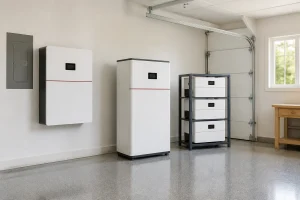
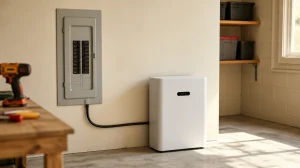
A 10 kWh home battery runtime covers most essential loads through a full night. The exact hours depend on which appliances stay on, and at what draw. This table gives usable hours per appliance for 10, 20 and 30 kWh systems. It plans at the 80% rule, so the numbers hold up in a real outage.
Every number below is a simple division: usable kilowatt-hours divided by the appliance draw. You can re-run any row for your own panel. The 80% planning rule keeps the math honest, since it does not count the last slice of the pack. If you have not sized the system yet, run the home battery sizing guide first. This page answers the hours question once the size is chosen.
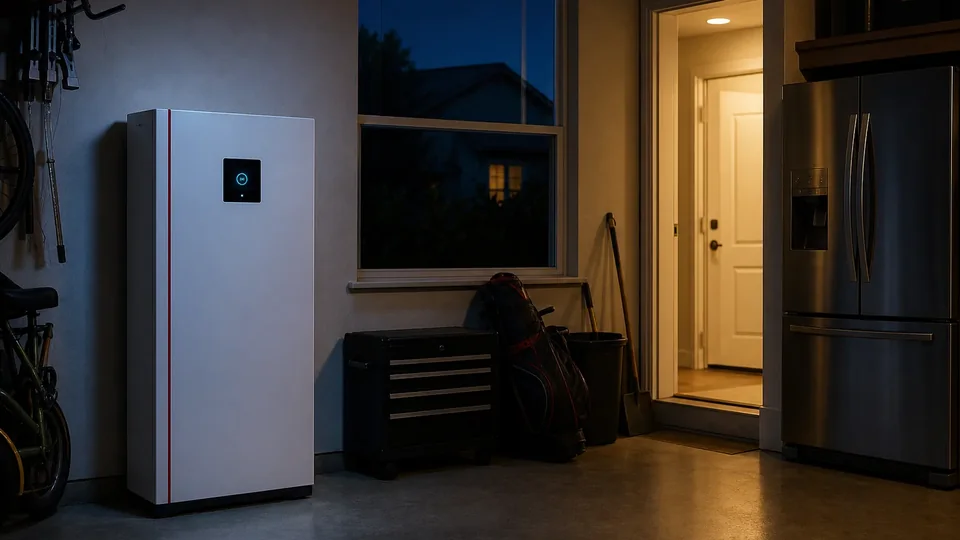
What Sets a Home Battery Runtime?
Two numbers set the runtime. First, the usable capacity: the rated kWh times 80%. The last slice ages the pack, and most plans do not count on it. Second, the load: the total watts of whatever stays on. The runtime is usable kWh divided by load. The table below does that division for eight common backup appliances at three system sizes.
The planning rule matters more than it looks. Our packs rate at 51.2 V LiFePO4. The home battery capacity page explains how rated and usable kWh differ. In short, a 10 kWh system plans on 8 usable, a 20 kWh on 16, and a 30 kWh on 24. When you read the hours that follow, remember that last slice is already off the table.
Appliance-by-Appliance Hours at 10, 20 and 30 kWh
RUIDASIMAI is a residential home battery manufacturer. So the table uses 10, 20 and 30 kWh as planning sizes. They sit around the 5, 10 and 16 kWh steps and stacks we actually sell. Each row lists a typical draw, then the hours that draw runs on 8, 16 and 24 usable kWh.
The eight rows, at three system sizes
The draws are planning values of the kind the US Department of Energy publishes for home energy use (energy.gov). Your nameplate or panel gives the real number.
| Appliance | Draw | 10 kWh | 20 kWh | 30 kWh |
|---|---|---|---|---|
| Fridge (avg) | 150 W | 53 h | 106 h | 160 h |
| LED lights | 100 W | 80 h | 160 h | 240 h |
| Router | 10 W | 800 h | 1600 h | 2400 h |
| CPAP | 50 W | 160 h | 320 h | 480 h |
| Well pump | 750 W | 10.7 h | 21.3 h | 32 h |
| Washer | 300 W | 26.7 h | 53.3 h | 80 h |
| Water heater | 3000 W | 2.7 h | 5.3 h | 8 h |
| Heat pump / HVAC | 2500 W | 3.2 h | 6.4 h | 9.6 h |
Two readings stand out. First, the small draws, lights and router among them, run for days. They barely move the math. Second, the big draws, water heater and HVAC on top, run for hours. One of them can define the whole plan. When a row lands at 2 to 3 hours, that appliance is the one to redesign around.
Two Worked Examples for a Real Night
Example 1: the essentials overnight
A fridge, ten LED fixtures and a router, for 10 hours. The fridge cycles, so it draws its 150 W average across the block. That is 1.5 kWh, plus 0.1 for the lights, plus 0.1 for the router, about 1.7 kWh in total. Even a 5 kWh pack covers that with margin. The overnight backup sizing guide starts from this same list, for exactly this reason.
Example 2: a bigger outage load
Now add a well pump that cycles, a CPAP and an occasional microwave, for 12 hours. The well pump runs about a third of the time, so it takes 2.5 kWh. The CPAP adds 0.6, the essentials 2, and three microwave cycles 0.3, for roughly 5.4 kWh. A 10 kWh system at 8 usable clears it. A 20 kWh unit gives the same night plus the morning. In practice, that extra margin is what makes the plan feel safe.
Why Whole-House Backup Is a Different Calculation
When the load includes HVAC, the table stops being useful. A heat pump that runs half the night can drink the whole 8 usable slice of a 10 kWh pack. That is why most homes split the panel into a backup circuit. They keep the essentials on the battery, and they leave the big loads to a generator or a larger system. If your climate runs cold, the winter backup guide shows how the table shifts when heating joins the load.
How to Read the Hours on Your Own Panel
The nameplate wattage on each appliance is the draw. The breaker list on the panel door is the load you control. First, mark the circuits that must stay on. Second, read the nameplate for each, and use the cycling average for compressor loads such as the fridge. Third, sum the watts and divide the usable kWh by that sum. When the result lands between two system sizes, take the larger one. Outages do not start at a convenient hour.
Frequently Asked Questions
How long does a 10 kWh battery run overnight?
For a fridge, lights and router, a 10 kWh home battery runtime runs past 40 hours of essentials. A 12-hour night then uses under a fifth of the usable slice. Add a well pump or heat and the number drops fast. The table above gives the exact hours per appliance.
Does the fridge really draw only 150 W?
The compressor peaks higher, but it cycles. Planning at the 150 W average is standard practice, since the fridge coasts for most of the cycle. If the unit is large or the weather hot, use 200 W to keep the margin honest.
Why plan at 80% and not the full rated capacity?
Because the last slice ages the pack, and a backup plan that leans on it is a plan that fails. The 80% rule matches the end-of-life convention the industry uses. The cycle life page explains that rule in detail. It keeps every hour in the table dependable.
Can I run an electric water heater on battery backup?
Only for short stretches. At 3000 W, it takes a 10 kWh system from full to the 80% floor in under three hours. Plan a gas or instant unit for real backup. Treat the battery as the fridge-and-lights layer, not the hot-water layer.
What if my outage load includes a heat pump?
Then size for it, or split the circuit. A 2500 W heat pump runs on the usable slice of a 10 kWh pack for a few hours only. When heat joins the load, the winter backup guide walks the larger capacity and the load-shedding options.
Do the hours change in winter?
Yes, on two fronts. Compressors such as the fridge work harder in heat. House loads shift in cold. Both numbers move, so re-run the table with winter draws before you rely on the same capacity. A plan sized for summer can fall short in January.
Bottom Line
Overall, a home battery runtime is usable kWh divided by the watts you keep on. Plan at 80%, list the must-stay-on circuits, and run each row at its nameplate draw. When the math lands between sizes, take the larger system. Split the big loads onto a separate circuit or a generator. The sizing guide takes the same load list. It turns it into a capacity recommendation, so the hours and the size agree.
Free load check
Want the hours calculated for your home?
Send us your breaker panel or a list of what must stay on. We run the math per appliance and confirm the capacity that covers your nights.
- Appliances that must stay on
- How many hours you want of backup
- Your current or planned capacity
Prefer email? Write to admin@rdsmod.com