The blog is RUIDASIMAI’s library of home battery guides for homeowners, installers and specifiers. Each article takes one step of the decision path and works it through with concrete figures. Sizing: how to match capacity and power to a specific household load. Form factors: how stackable, wall-mounted and floor-mounted designs compare in practice. Certification: what IEC 62619, CE, UL 9540 and UL 1973 mean for a given market. Shipping: the UN 38.3, MSDS and dangerous goods rules that apply to lithium home batteries. Installation: where a battery can go, what protection it needs, and what the inverter requires. New guides are added as standards, tariffs and installation practice change. The articles are written by the team that specifies the systems, so the references come from production work rather than marketing copy. To move from guide to configuration, send your load profile and installation constraints through the contact form; the home battery guides above exist to make that conversation precise.

Home battery shipping runs on one document: the UN38.3 test summary. A residential battery is far too large for air freight. So every container moves by sea under UN3480 rules, w

Home battery OEM, ODM and private label are three different deals, not three names for the same thing. OEM means we build your design. ODM means we design it and you brand it. An
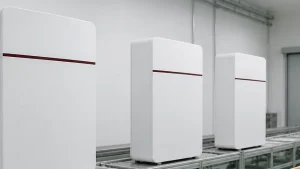
Home battery MOQ is not one number. It is a menu that moves with what you customize: a sample order can be as small as one unit, while a private-label line starts in the hundreds

Home battery incentives in 2026 no longer include the federal tax credit. The 30% credit ended for systems installed after December 31, 2025. States and utilities now take over,

Home battery cost in 2026 is set by three things: the capacity you actually need, the battery chemistry, and how much of the electrical work your install touches. Because the 30%
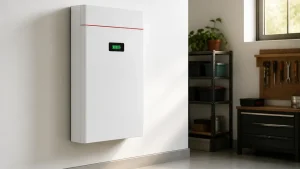
A LiFePO4 home battery lifespan runs 10 to 15 years under normal home use. An NMC or NCA unit reaches its end threshold sooner at the same daily depth. The pace-setter is not the
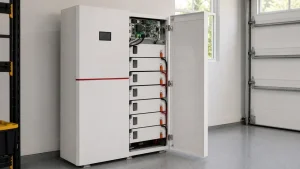
A home battery certification is proof that a named model passed a named test. When you open a brochure, the logo proves nothing; the certificate number, its scope and the test la
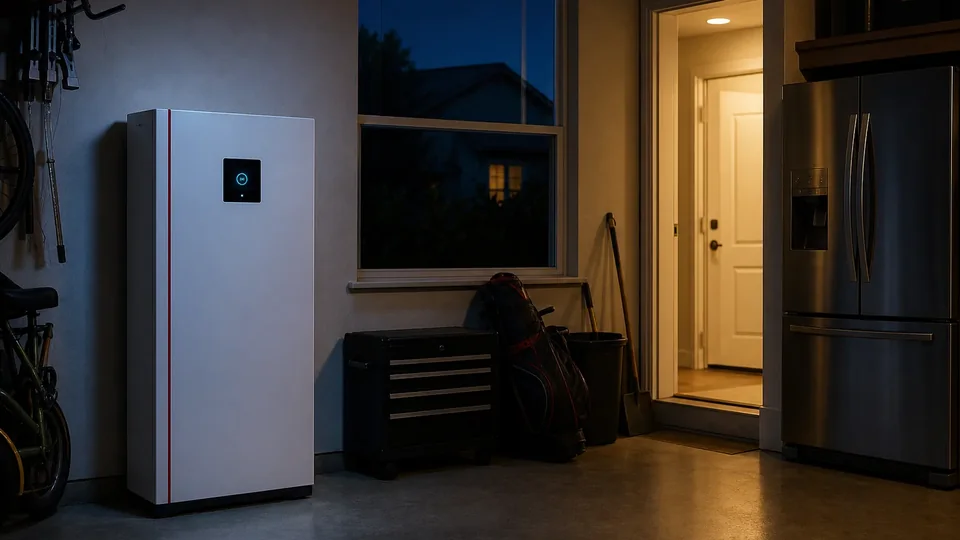
A 10 kWh home battery runtime covers most essential loads through a full night. The exact hours depend on which appliances stay on, and at what draw. This table gives usable hour
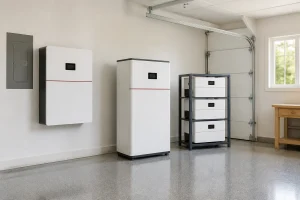
A wall-mounted home battery saves floor space. A floor-mounted unit puts everything in one cabinet. That single-cabinet layout is also the main advantage of a floor-mounted batte
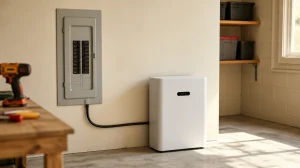
To size a home battery, you only need three inputs: your essential load, your runtime target, and the derating factor. This guide walks through the full calculation step by step,

When you source home batteries from Chinese factories, three numbers decide the deal: minimum order quantity (MOQ), lead time, and cert status. This guide gives you typical range

The best home batteries of 2026 range from $577 to $1,579 per installed kWh. The EG4 WallMount All-Weather leads on price at $577 per kWh. The Tesla Powerwall 3 remains the most-
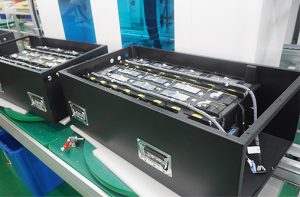
LFP vs NMC is a key comparison when choosing a home energy storage battery. LFP, or lithium iron phosphate, is known for strong thermal stability and cycle durability. NMC, or ni
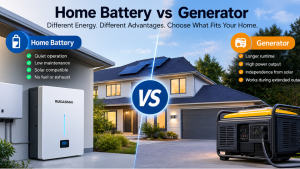
Home Battery vs Generator
When the grid goes down, both a home battery and a generator can provide backup power, but they work in fundamentally different ways. A home battery vs
