To size a home battery, you only need three inputs: your essential load, your runtime target, and the derating factor. This guide walks through the full calculation step by step, with a load table you can reuse for any home and a 5, 10, and 16 kWh comparison.
The math is easier than most people expect. Because inverter loss and heat shrink usable capacity, the only trick is to apply the derating factor after the load math, not before. Follow the five steps below and you get a number you can defend in front of any installer.
How to Size a Home Battery: The Five-Step Method
Five steps take you from breaker panel to a capacity number. Each one takes minutes, and together they replace most guesswork.
Step 1: List the circuits that must stay on
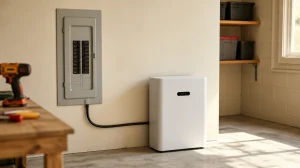
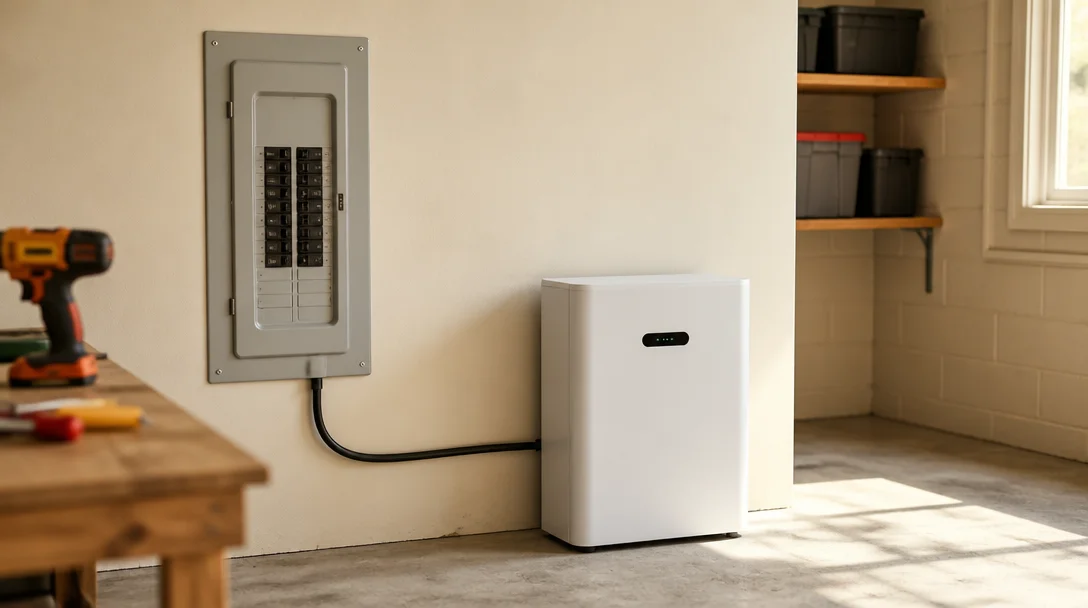
Start at the breaker panel. Write down every circuit that protects a load you cannot live without: fridge, sump pump, well pump, lighting, router, medical gear. Leave out the comfort loads first: central HVAC, dryers, ovens, EV chargers. In practice, the essential list for a typical 3-bedroom home runs 8 to 12 circuits. That list sets your home battery size before anything else.
Step 2: Add the watts, not the hours
For each circuit, note the wattage, not the daily usage. Because a battery must carry the peak draw, the compressor spike of a fridge matters more than how often it runs. The load table below lists typical draws for 12 common appliances. A utility household appliance usage chart is a good cross-check when a label is missing.
Step 3: Apply the 0.7 derating factor
Nameplate capacity is not usable battery capacity. Inverter round-trip loss, self-consumption, and heat loss take a bite, so the rule of thumb is 0.7 of the rated kWh. A 16 kWh system gives you about 11 kWh you can actually draw down. Keep the 0.7 in every line of the math, and it stops surprising you at runtime.
Step 4: Pick the runtime target and multiply
Most homeowners want 4 to 8 hours for essentials. Multiply your essential load in kW by the hours, then divide by 0.7 to get the rated size you need. For example, 1.5 kW of essentials for 8 hours is 12 kWh of use, or about 17 kWh rated. Round to the next battery step and the math is done.
Step 5: Match a system size and leave room to grow
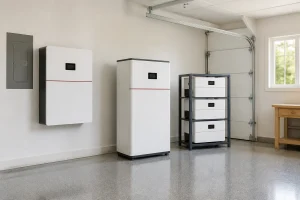
Standard residential systems come in 5, 10, and 16 kWh steps, and many scale by adding modules. If your number lands between steps, buy the modular system at the lower step and add a second one later. Because outages cluster in winter storms, the expand path beats one oversized unit most of the time.
The Load Table: Typical Draws for 12 Common Home Appliances
Use this table in Step 2 to size the battery. Values are typical draws, not peaks. Cross-check any single number against the appliance label before you trust it.
| Home appliance | Typical draw (W) | Backup note |
|---|---|---|
| Fridge (compressor cycle) | 150–750 | Must keep; spike at start |
| Sump pump | 500–1000 | Basement homes |
| Well pump | 750–1500 | Rural homes |
| LED lighting (whole home) | 100–300 | Low |
| Router and modem | 10–30 | Trivial |
| TV and home office | 100–300 | Optional |
| Oxygen concentrator | 300–600 | Medical must-keep |
| Mini-split heat pump | 500–3500 | Biggest variable |
| Washer | 500–1200 | Run between outages |
| Dryer | 1800–5000 | Comfort load, skip on backup |
| Electric range | 2500–5000 | Comfort load, skip on backup |
| EV charger | 7000 | Never size backup around this |
Add the must-keep rows and you have the essential load. For a typical 3-bedroom home it lands near 1.2 to 1.8 kW. Add the mini-split in winter and it climbs past 3 kW, which changes the answer a lot for any battery.
Why 0.7: Where the Nameplate Capacity Goes
Three things shrink usable energy. First, inverter round-trip loss takes a few percent on the way in and out. Second, the inverter and fans drink power even when no appliance runs. Third, cold weather drags cell output down. Put the three together and 0.7 of the battery’s nameplate is the honest number. Use 0.8, and your runtime disappoints in January.
5, 10, or 16 kWh: Which Size Fits Your Home
Context first: the median US install stores 13.5 kWh, and 71 percent of installs use a single battery, per the 85,827-install dataset behind our best home batteries of 2026 ranking.
| System size | Usable at 0.7 | Covers | Runtime at 1.5 kW |
|---|---|---|---|
| 5 kWh | ~3.5 kWh | Fridge, lights, router, sump | ~2.3 hours |
| 10 kWh | ~7 kWh | Above + office, medical | ~4.7 hours |
| 16 kWh | ~11 kWh | Above + mini-split heating | ~7.5 hours |
Two homes with the same square footage can land on different rows. The one with a well pump and a mini-split climbs fast. If your number sits between two rows, pick the modular size below and plan the expansion, not the max size today.
Three Sizing Mistakes to Avoid
First, sizing around the biggest appliance. Because the dryer and the EV charger are comfort and travel loads, building the battery around them doubles the cost for hours you rarely use.
Second, sizing for summer. Defrost cycles, longer nights, and heating push winter loads well past the summer number. Size for the cold month, and the rest of the year comes with margin.
Third, treating capacity as fixed. A modular system that grows from 10 to 20 kWh protects your first dollars. Buy the path, not just the first step.
FAQ: Sizing a Home Battery
How do I calculate my home’s essential load?
Walk the breaker panel and list every circuit that protects a must-keep load. Note the watts for each, from a load table or the appliance label. Add the rows and you have the essential load in kW. Keep the list; you will reuse it for insurance, generator, and battery math too.
What size home battery do I need for 8 hours of backup?
Multiply your essential load by 8, then divide by 0.7. At 1.5 kW that is 12 kWh of use, or about 17 kWh rated, so a 16 kWh system is the close match and 20 kWh covers it with margin. Your own panel list sets the real number.
Should I size the battery for summer or winter?
Winter. Defrost cycles, longer nights, and heating push the load up, and cold drags usable capacity down. A battery sized for the cold month runs the warm months with room to spare.
Can I add battery capacity later?
On modular systems, yes. Most residential units scale by adding a module or a second pack, up to the inverter’s limit. Check the inverter’s max pack count before you buy the first one, and the later growth costs far less than a full replan.
Does adding solar change the sizing math?
Not the outage math. Solar adds generation, but the battery still sizes to the runtime you want at night or in a storm. What solar changes is payback, since the battery starts fuller more often. Our home battery payback period guide runs that side of the math.
Who can run the sizing math for my home?
Send us your breaker panel and tariff, and our team runs the load math, applies the derating, and confirms the size that covers your essentials in writing — before you compare quotes.
The Bottom Line
To size a home battery, list your essential circuits, add their watts, pick a runtime, and multiply by the 0.7 factor. The math takes an evening, and the number it gives you is the one every quote should answer to. When you size a home battery from your own panel, you stop comparing prices and start comparing systems.
To see the capacity options themselves, our home battery capacity guide compares 5, 10, and 16 kWh. For the chemistry that sets the warranty curve, LFP versus NMC covers the six key differences. And once the size is set, the payback period guide shows what it costs per year.
RUIDASIMAI is a home battery maker in China, building floor, wall, and stackable LiFePO4 systems. We run sizing reviews from a breaker panel photo and a tariff — ask below.
Two situations come up most often once the five steps above are applied. For a single-night target, sizing a battery for overnight backup works through the arithmetic on an off-peak tariff. If load is expected to grow – a heat-pump water heater, an EV charger, or a second freezer – expanding a home battery later covers which designs allow it and which do not.
Want the math run on your actual home?
Send us your breaker panel and tariff. We run the load math, apply the derating, and confirm the exact capacity that covers your essentials — before you talk to any supplier.
- Your breaker panel photo or circuit list
- Tariff rates (day and night)
- How many hours of backup you want
Prefer email? Write to admin@rdsmod.com