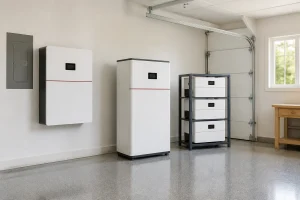
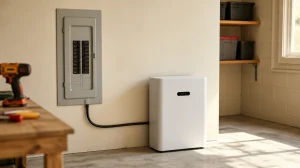
Home battery cost in 2026 is set by three things: the capacity you actually need, the battery chemistry, and how much of the electrical work your install touches. Because the 30% federal tax credit ended after 2025, every 2026 quote you compare is a net price. Finally, below: the capacity tiers, the pack-versus-everything-else split, and how to read a quote line by line.
Data checked: volume figures cover 85,827 U.S. installs from October 2025 to September 2026; pack pricing cites the BNEF 2025 battery price survey; electricity rates use the EIA 2026 residential projection. Next full revision: January 2027.
This is the cost side of the same data behind our best home batteries 2026 roundup. Use it together with the home battery sizing guide when you know which tier your home falls into.
How Much Does a Home Battery Cost in 2026?
First, the honest answer: there is no single market rate, because price depends on capacity, chemistry and install scope. Across 85,827 US installations logged between October 2025 and September 2026, the median system was 13.5 kWh. First, 71% of homes took one unit. Then 24% took two, and 5% took three or more.
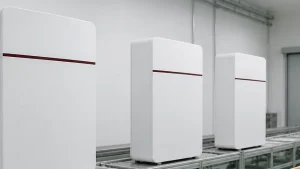
The four capacity tiers below summarize that dataset plus 2026 market structure. Specifically, this price breakdown maps each tier to the job it does in a real home. The low end is a compact 5.8 kWh LFP unit. The top end is a three-battery whole-home build. For what each capacity actually covers in your house, the home battery capacity guide breaks the math down appliance by appliance.
Which Capacity Tier Matches Your Home and What Does It Cover?
The table shows the capacity tiers, the units involved, what each tier covers, and the question to ask on every quote.
| Capacity | Units | Covers | Ask on every quote |
|---|---|---|---|
| 5-6 kWh | 1 | Essentials only, short outages | What stays on first |
| 10-13.5 kWh | 1 | Key circuits, 12-24 h backup | Which circuits are priority |
| 15-20 kWh | 2 | Average home, full day | Full-day loads covered |
| 30 kWh | 2-3 | Whole home, long outages | Whole-building scope |
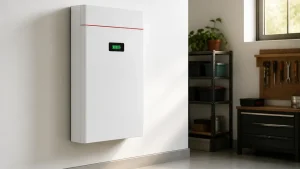
In fact, the 10-13.5 kWh tier is where most 2026 installs land. It holds the 14.3 kWh LFP WallMount system, the 13.5 kWh Tesla Powerwall 3 and the 10 kWh Enphase IQ 10C. Meanwhile, the two-battery 15-20 kWh band is what sunlynk’s July 2026 cost survey calls the average full-day backup for a typical home.
What Is the Real Home Battery Cost per kWh?
Sticker price hides the comparison. The figure that ranks systems is cost per usable kWh, and it varies more across systems than the sticker does. When you read any quote against its own kWh figure, the ranking becomes obvious. That is because two systems with the same sticker can deliver very different usable energy. EnergySage market data ranks installed systems on exactly this figure, and the spread is wide. Full per-model capacity and chemistry numbers live in the 2026 battery roundup.
Where Does the Money Actually Go: Pack, Inverter, Labor?
However, the battery pack itself is the cheap part. Besides, BNEF’s 2025 battery price survey put the stationary pack at a record low. Against a typical installed system, the pack is a single-digit share. That is because the larger share buys integration, safety, compliance and labor.
- Inverter and coupling. When you AC-couple into an existing setup, the inverter and its labor are the main add-on. If you go DC-coupled with new solar, the build takes on its own scope.
- Permitting and utility interconnection. These vary a lot, and they move when your jurisdiction reviews interconnection slowly.
- Panel work and transfer switch. Expect real scope when your electrical service needs an upgrade.
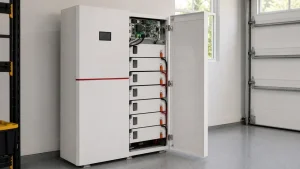
- Safety hardware, BMS and the sealed enclosure. These are priced into every system but rarely itemized.
Two forces explain why prices have not fallen with the cells. Hardware keeps drifting down. Permitting, inspection and labor drift up. As a result, NREL’s cost outlooks call this scissors effect the reason installed prices hold flat. If the battery is not paired with solar at all, the standalone math shifts. Our home battery without solar piece covers when that still pays off.
Does the 30% Federal Tax Credit Still Apply in 2026?
No. The 25D credit for residential storage stopped for systems installed after December 31, 2025. So 2026 is the first clean year of net-price shopping. That means the home battery cost in any quote is the full net number. Two things follow. First, a per-kWh gap that the credit used to absorb is now the full gap. So the chemistry choice below matters more. Second, state and local incentives remain live. In addition, programs such as California’s SGIP and New York utility programs still fund storage in many regions. In practice, they can cut the net cost meaningfully. On the electricity side, the EIA projects 2026 US residential rates to rise again, while the East Coast sees the largest moves. That tightens the home battery payback period in most tariff zones.
Why Do Two Systems with the Same Capacity Cost Different Amounts?
Chemistry is the biggest lever on the battery price inside one capacity tier. In fact, LFP systems price well below NMC systems per usable kWh, and the gap holds at every tier. The trade-offs cycle by cycle are detailed in LFP versus NMC home batteries. Because inverter and soft costs spread across more capacity, multi-battery builds cost less per kWh than a single unit. That is why the 30 kWh tier holds roughly the same per-kWh price as the 15 kWh tier.
How Do You Compare Quotes Before You Pay?
Compare the installed price per usable kWh, not sticker price. If a quote is bundled, it hides the cost per kWh story exactly where two installers differ. Then ask for the line-item split: battery, inverter, labor, permit, panel work and warranty. Check the usable percentage, because it is 100% for LFP and less for NMC. Finally, check warranty years before ranking systems against each other. RUIDASIMAI is a residential home battery manufacturer focused on LiFePO4 wall-mounted and stackable systems. We share the market data above freely, and our engineers answer specific pricing through the contact route below rather than on this page. If you are weighing a direct-from-manufacturer route against a local installer, the sourcing guide from China walks through what that comparison looks like in practice.
What a Per-kWh Quote Is Actually Made Of
We are a custom home battery factory: 20+ years producing residential LiFePO4 systems, 90,000+ systems running in 80+ countries, and 5 GWh of in-house annual capacity across floor-mounted, wall-mounted and stackable formats from 5 to 30.72 kWh. We quote by configuration and quantity, so this page explains how a cost is built, never our own price.
Three lines decide whether an installed per-kWh figure is fair. The pack: cell grade and cycle band, which in our range is Grade A LiFePO4 from EVE, CATL or Gotion at 6,000 to 8,000 cycles at 25°C depending on capacity. The pairing: inverter compatibility, because a mismatch turns a battery quote into an exchange-cost quote (our published figure is 99% of leading hybrid inverter brands, and the supported list goes out on request). The labour and permitting block, which sits outside any factory’s control and carries the widest spread.
Order terms are where a buyer’s lever actually is. Our MOQ and lead time table starts at 100 to 200 units for standard hardware at 30 to 45 days, and 500 to 1,000 units at 60 to 90 days for a private-label enclosure. If you are comparing suppliers on cost per kWh, sourcing from China is the qualification checklist, and an OEM or private-label build is what moves the number furthest.
Frequently Asked Questions
How much does a single home battery system price in 2026?
First, a single number does not exist, because price depends on capacity, chemistry and install scope. The market median is a 13.5 kWh system, and most buyers take one unit. When you compare one-unit quotes, the cost per usable kWh is the figure that ranks them. Get the line-item split before you sign.
Which home battery offers the best price per kWh in 2026?
LFP systems sit at the bottom of the per-kWh range, and the 14 kWh class holds the best figures. The battery price gap comes down to chemistry and usable capacity, not brand. Checking the per-kWh number against the usable percentage is the fastest way to rank any two quotes.
Why is the battery pack so much cheaper than the installed system?
The stationary pack sits at a record low, which explains much of the home battery cost gap. You pay for the inverter, the enclosure, safety systems, labor, permitting and the warranty. Hardware prices fall slowly, while labor and compliance costs rise. Because of that tension, the total holds flat.
Does the 30% federal tax credit still apply to home batteries?
No. The 25D credit stopped for systems installed after December 31, 2025. So 2026 buyers pay the full net price. In addition, state and local programs remain live in funded regions. Programs such as California SGIP and New York utility incentives can lower the net cost. Check local incentives before comparing quotes against older, credit-adjusted articles.
What size home battery do most homes install?
The median 2026 install is 13.5 kWh. It covers key circuits through 12 to 24 hours of backup. Two-battery systems at 15 to 20 kWh serve the average home for a full day. When you need whole-building coverage, move to 20 to 40 kWh across two or three units.
How much does AC versus DC coupling change the home battery cost?
While AC coupling works on any roof, it adds its own inverter and labor on top. A DC-coupled install folds the battery into the solar build. The cheaper path depends on whether solar already sits on your roof.
Bottom Line
Home battery cost in 2026 is set by capacity, chemistry and install scope, and the median system is 13.5 kWh. The pack is the cheap part. Integration, safety, permitting and warranty are what you actually buy. First, compare quotes on installed cost per usable kWh. Then demand the line-item split before you sign, because that is the real price breakdown.
Two technical choices move the figure more than most buyers expect. System topology is covered in AC-coupled vs DC-coupled battery systems, because a retrofit AC-coupled install and an integrated DC-coupled one bill differently. Cell endurance is covered in LiFePO4 cycle life, since the cycles a pack is rated for set the cost per kWh delivered across its service life.
Quote check
Want a price checked line by line?
Send us a quote or a target capacity. We run the cost-per-kWh math and split pack, inverter and labor to flag the lines that inflate the number.
- A quote or target capacity in kWh
- Existing solar or inverter, if any
- Where the battery will be installed
Prefer email? Write to admin@rdsmod.com