Home Battery vs Generator
When the grid goes down, both a home battery and a generator can provide backup power, but they work in fundamentally different ways. A home battery vs generator comparison should consider runtime, power output, fuel, noise, maintenance, safety, solar compatibility, and total system cost.
The battery stores electricity and delivers it through an inverter during an outage. A generator produces electricity while its engine runs, typically using gasoline, propane, diesel, or natural gas.
For quiet, automatic backup and solar integration, a home battery can be a practical solution. For extended outages where continuous energy supply is the priority, a generator can provide longer operation as long as fuel is available.
The right choice depends on the home’s load profile, expected outage duration, recharge options, installation conditions, and required backup power.
Home Battery vs Generator: Key Differences
The simplest way to compare the two technologies is to look at how they store or produce energy.
| Factor | Home Battery | Generator |
|---|---|---|
| Energy source | Stored electricity | Fuel |
| Runtime | Based on usable battery capacity | Based on fuel supply |
| Noise | Very low during discharge | Engine noise |
| Maintenance | Generally low | Regular engine maintenance |
| Solar integration | Strong fit | System-dependent |
| Exhaust | None during battery operation | Yes for fuel-powered models |
| Long outages | Requires sufficient capacity or recharging | Can continue while fuel is available |
| Automatic backup | Available with compatible equipment | Available with compatible systems |
| Refueling | Not required during discharge | Required when fuel runs out |
| Normal-use applications | Backup + energy management | Primarily backup generation |
The key difference is therefore stored energy versus continuous generation.
A battery has a finite amount of usable energy available at the start of an outage. A generator can continue producing electricity when its fuel supply is replenished.
Neither technology is automatically suitable for every home. The better question is which backup architecture matches the loads and outage conditions.
How Home Batteries and Generators Work
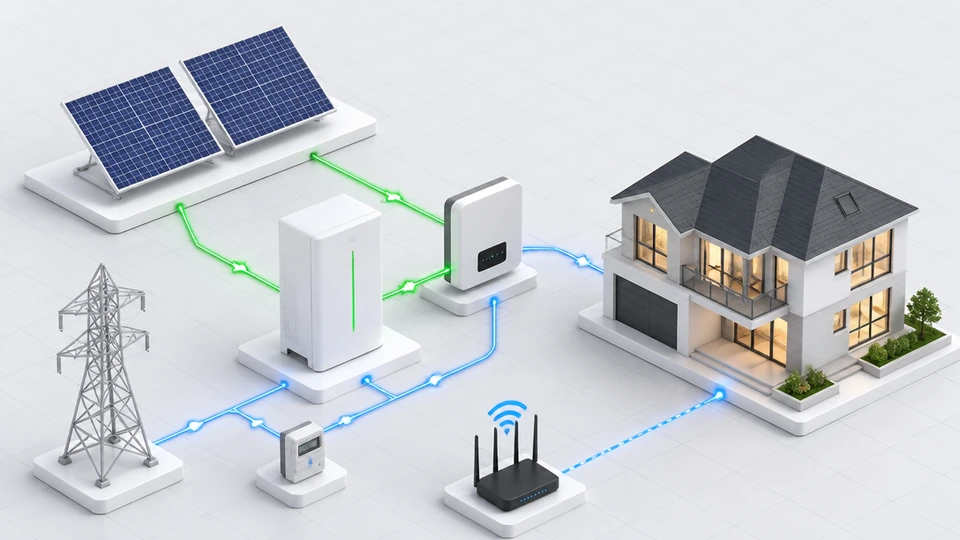 A home battery stores electrical energy in battery cells. A battery management system monitors the cells, while an inverter converts stored DC electricity into AC power for household loads.
Depending on the system, the battery can charge from the grid, solar PV, or another compatible power source.
When the grid fails, compatible transfer equipment isolates the home from the utility grid and allows the backup system to supply designated circuits or loads.
A generator follows a different process. Its engine consumes fuel and drives an alternator to generate electricity. A standby generator can be connected to an automatic transfer switch, allowing it to start when grid power fails.
This difference affects almost every other part of the comparison.
A battery’s runtime is determined by stored energy and load. A generator’s runtime is determined mainly by fuel availability and consumption.
For example, a 10 kWh battery supplying a constant 1 kW load would provide about 10 hours of theoretical energy before accounting for inverter losses, reserve settings, and other system limits.
A generator does not work from a fixed energy reservoir. It can continue operating as long as fuel is available and the generator is operating within its specifications.
Battery vs Generator: Runtime, Cost, Noise and Maintenance
Runtime
Runtime is one of the most important differences.
For a battery, a basic runtime estimate is:
Runtime ≈ usable battery capacity ÷ average load
A 10 kWh battery does not necessarily provide 10 hours of backup because the actual result depends on the connected load.
For example, if essential household loads average 500 W:
- 10 kWh provides about 20 hours of theoretical energy.
- 15 kWh provides about 30 hours.
- 20 kWh provides about 40 hours.
These are simplified calculations. Actual runtime depends on usable capacity, inverter efficiency, reserve settings, temperature, and changes in household demand.
High-power appliances can reduce runtime quickly. An electric water heater, HVAC system, oven, or EV charger can consume substantially more energy than lighting, refrigeration, networking equipment, and security systems.
A generator’s runtime is normally expressed in terms of fuel consumption. It can continue producing power after refueling, provided the fuel is available and the generator can operate safely.
For short or moderate outages, battery capacity may be sufficient. For multi-day outages, fuel availability becomes an important generator advantage.
Cost
The purchase price alone does not provide a complete comparison.
For a home battery, total cost can include:
- Battery system
- Inverter
- Transfer equipment
- Installation
- Electrical upgrades
- Charging electricity
- Maintenance
- Future battery replacement
For a generator, buyers should consider:
- Generator
- Transfer switch
- Installation
- Fuel
- Fuel storage
- Maintenance
- Exhaust and ventilation requirements
- Possible electrical upgrades
A battery may also provide value during normal grid operation. Depending on the utility tariff and system configuration, it may be used for energy management or other applications outside an outage.
A generator primarily creates value when backup generation is required.
For solar-equipped homes, a battery can also store electricity generated by the PV system. NREL identifies battery storage paired with distributed energy resources as an approach that can improve resilience during grid outages.
The correct cost comparison should therefore use the total system cost over the expected operating period, rather than comparing the battery purchase price with the generator purchase price alone.
Noise
Noise is another major difference.
A battery does not have an internal combustion engine. During normal discharge, it does not produce the engine noise associated with a fuel generator.
A fuel generator has an engine, so noise is part of normal operation. Actual sound levels vary by generator model, enclosure, load, and installation distance.
This difference can matter in residential neighborhoods, especially when backup power is required overnight.
For homeowners who want backup power without running an engine throughout an outage, battery storage can offer a quieter operating experience.
Maintenance
Battery systems generally have fewer mechanical components than engine generators.
A generator requires routine maintenance based on the manufacturer’s schedule. Depending on the model, this can include oil, filters, spark plugs, fuel-system checks, battery checks, and periodic testing.
A battery does not require engine oil or spark-plug maintenance. However, it still requires appropriate electrical installation, monitoring, system checks, and maintenance according to the manufacturer’s instructions.
Fuel storage also adds another maintenance consideration for generators.
For low routine mechanical maintenance, battery storage has a structural advantage. For long-duration energy availability, generators have a different advantage because fuel can be replenished.
Which Is Better for Different Backup Scenarios?
There is no single answer to every backup-power application. The required loads and outage conditions should determine the system design.
Short Power Outages
For short outages, a battery can provide a convenient backup solution.
A properly integrated battery system can automatically supply selected loads when the grid fails. It can keep essential equipment operating without starting a combustion engine.
Typical backup loads may include:
- Refrigerator
- Internet router
- Security system
- Lighting
- Computers
- Garage door opener
- Selected kitchen appliances
For these applications, a battery’s limited energy capacity may not be a major constraint.
Long Power Outages
For outages lasting several days, energy availability becomes more important.
A battery can provide extended backup if it has enough capacity or a reliable recharge source. Solar can help recharge a compatible system during daylight.
A generator can continue producing electricity as long as it has access to fuel.
This makes fuel logistics a key part of the decision.
A homeowner considering a generator for extended outages should evaluate fuel storage, fuel availability during severe weather, and the generator’s actual fuel consumption under the expected load.
Homes With Solar
Solar changes the backup-power calculation.
A battery can store excess solar generation and make that energy available later. With the correct system architecture, solar and battery storage can also support backup operation during a grid outage.
However, simply having solar panels does not automatically mean a home can operate normally during a grid outage.
The system may require compatible:
- Battery storage
- Inverter
- Transfer equipment
- Islanding protection
- Load management
- Electrical controls
The complete solar-plus-storage system must be designed to operate safely when the utility grid is unavailable.
Homes With High-Power Loads
Large electrical loads require more attention to inverter power than battery capacity alone.
A battery may have enough kWh to provide long runtime but still have insufficient power output for a large motor or heating load.
Buyers should check:
- Continuous output power
- Peak or surge power
- Motor-starting requirements
- Number of simultaneous loads
- Load-management functions
This is particularly important for HVAC systems, pumps, compressors, electric water heaters, and EV chargers.
A generator may be more suitable for some high-power backup applications, while a larger battery inverter or managed-load configuration may work for others.
Homes Prioritizing Quiet Operation
If noise is an important requirement, battery storage offers a straightforward advantage because it has no combustion engine operating during battery discharge.
This can be especially relevant for nighttime backup and homes in areas where generator noise may affect neighbors.
Can a Home Battery and Generator Work Together?
Yes. A home battery and generator can be used as complementary technologies when the system is designed for that configuration.
A possible architecture is:
Battery → immediate backup
Generator → extended backup
The battery can handle the initial outage and selected loads, while a generator can provide additional energy during a prolonged outage.
However, compatibility should never be assumed.
The battery inverter, generator, transfer equipment, controls, grounding, protection system, and operating modes must be designed to work together.
For an OEM battery project, the manufacturer should confirm generator compatibility at the system-design stage rather than treating it as a simple plug-and-play feature.
What to Check Before Buying a Home Battery
For homeowners, installers, distributors, and OEM buyers, battery capacity is only one part of the specification.
 1. Usable Capacity
Check both nominal and usable capacity.
A battery advertised as 10 kWh may not provide the full 10 kWh to the connected load because of operating reserves and system limits.
2. Power Output
Check continuous and peak output separately.
A system with high energy capacity but insufficient inverter power may not support the appliances you expect to run.
3. Transfer Time
If backup continuity matters, confirm the specified transfer time and the conditions under which that specification applies.
The complete backup system matters, not only the battery pack.
For a side-by-side look at what different transfer-time specifications mean in practice, see our guide on 20 ms vs 10 s transfer time.
4. Battery Chemistry
Lithium iron phosphate, commonly called LFP, is widely used in stationary energy storage because of its combination of cycle performance, thermal characteristics, and energy-storage suitability.
The correct chemistry should still be evaluated against the project’s operating temperature, power requirements, cycle expectations, and certification requirements.
5. BMS and Protection
Ask how the battery management system handles:
- Overcharge
- Over-discharge
- Overcurrent
- Temperature
- Cell balancing
- Fault detection
- Communication
The BMS is a core part of the battery system rather than an optional electronic accessory.
6. Certification
Do not evaluate certification from a single component in isolation.
For North American projects, buyers should verify the certification applicable to the complete energy storage system and its intended installation.
UL explains that UL 9540 covers energy storage systems and equipment at the system level, including charging and discharging, protection, controls, and related functions.
The exact certification requirements depend on the product, installation, jurisdiction, and applicable codes.
7. Solar and Generator Compatibility
If the system may later connect to solar or a generator, confirm compatibility before purchase.
Retrofitting incompatible equipment can be more complicated than specifying the complete architecture at the beginning of the project.
8. Factory Testing
For wholesale and OEM buyers, ask what testing occurs before shipment.
Useful records may include:
- Cell or material traceability
- BMS testing
- Pack testing
- Insulation testing
- Voltage and capacity testing
- Communication testing
- Protection-function testing
- End-of-line inspection
- Batch records
These records provide stronger evidence of manufacturing control than a product brochure alone.
Home Battery vs Generator: Quick Decision Guide
Use this framework to identify the technology that fits the application.
| Your priority | Technology to evaluate |
|---|---|
| Quiet backup | Home battery |
| Low mechanical maintenance | Home battery |
| Solar integration | Home battery |
| Short outages | Home battery |
| Automatic essential-load backup | Both |
| Multi-day backup | Generator or combined system |
| Continuous high-power loads | Generator or appropriately sized battery system |
| No combustion exhaust during discharge | Home battery |
| Replenishable energy during a long outage | Generator |
| Battery + long-duration backup | Combined battery and generator |
This is not a universal ranking. The required power, energy, outage duration, fuel availability, solar resources, and installation conditions should determine the final system design.
What Home Battery Buyers Should Ask a Manufacturer
For an OEM or wholesale home battery project, these questions can help separate a complete manufacturing solution from a standard product listing:
- How much usable battery capacity does it offer?
- What are the continuous and peak power ratings?
- How fast can the complete system transfer power?
- Which inverter platforms are supported?
- Can the system integrate with solar?
- Can it operate with a generator?
- Which battery chemistry is used?
- What BMS protection functions are included?
- Which certifications apply to the complete system?
- What tests are performed before shipment?
- Can the battery pack, enclosure, BMS, or communication interface be customized?
- What quality and traceability records are available for each production batch?
For OEM projects, these questions should be answered before finalizing the battery specification.
Why Factory Capability Matters for Home Battery Projects
A home energy storage system is more than a collection of battery cells.
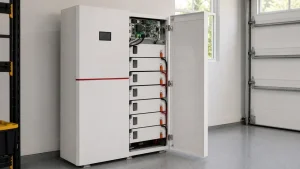
The finished product can include cells, modules, a battery management system, enclosure, thermal management, wiring, protection components, communication interfaces, and inverter integration.
Manufacturing quality therefore depends on more than cell selection.
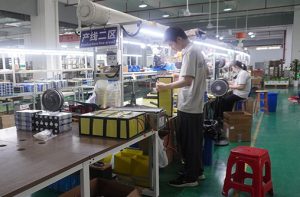
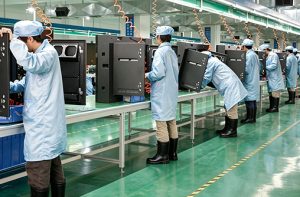
A capable OEM manufacturer should be able to explain how the project moves from technical requirements to battery design, prototype validation, production testing, and batch quality control.
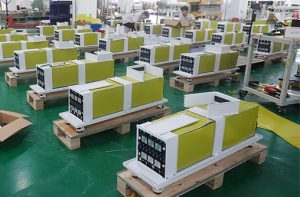
For RUIDASIMAI, an OEM discussion should start with the application requirements: required capacity, continuous and peak power, backup loads, operating environment, communication protocol, certification target, installation market, and expected production volume.
That information allows the battery architecture and manufacturing requirements to be evaluated before mass production.
Frequently Asked Questions
Is a home battery better than a generator?
They are designed around different backup models. A home battery stores electricity before an outage, while a generator produces electricity from fuel during the outage. The appropriate option depends on runtime, load, fuel availability, noise, maintenance, and system configuration.
How long can a home battery power a house?
Runtime depends on usable capacity and the connected load. A simple estimate is usable kWh divided by average kW load. Large appliances can reduce runtime substantially.
Can a home battery replace a generator?
For some homes and outage scenarios, yes. For long outages or high continuous loads, the required battery capacity may be substantial. A generator or combined system may be considered when long-duration energy supply is the priority.
Can a home battery work without solar?
Yes. A compatible battery can charge from the grid. Solar is an additional charging source, not a universal requirement.
Is a home battery quieter than a generator?
Yes. A battery has no combustion engine during normal discharge, while a fuel generator produces engine noise during operation.
Can a home battery and generator work together?
Yes, when the battery inverter, generator, transfer equipment, controls, and protection systems are designed for compatibility.
What is more important: battery kWh or inverter kW?
Both matter. kWh determines how much energy is available, while kW determines how much power the system can deliver at a given time. A backup system needs enough of both for the intended loads.
Engineering support
Battery or generator for your backup power?
Share your critical loads and how long they must run. Our engineers compare battery backup against generator backup for your site, with running costs made explicit.
- List of appliances that must stay on
- Outage length you want to cover
- Current generator model, if you have one
Prefer email? Write to admin@rdsmod.com