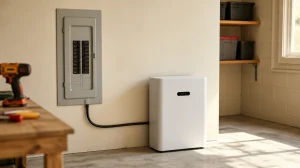
A home battery in winter behaves differently from the way a brochure describes it. Usable capacity drops, charging slows, and on the coldest nights the system protects itself instead of serving the house.
None of that is a fault. It is chemistry and physics, and it is predictable. Here is what changes, what stays the same, and what you can do about it.

What Changes Below 10°C
Lithium iron phosphate cells lose usable capacity at low temperature. The effect is gradual down to about 10°C and steeper below 0°C. A pack rated at 10 kWh may deliver noticeably less on a frosty morning, then recover fully once it warms.
Charging slows for a second reason. Cold cells accept current more slowly, so the battery management system reduces the charge rate to protect the anode. That is deliberate protection, not a malfunction.
What Stays the Same
Cycle life ratings stay valid, because the laboratory measures them at 25°C under controlled conditions. Voltage behaviour, communication with the inverter and the protection set all work exactly as they do in summer. That is why winter performance is predictable rather than mysterious.
Low-temperature charge protection is part of the same 18-layer protection set on our units, alongside over and under voltage, overcurrent and short circuit protection. The summer counterpart is covered in our guide to home battery overheating.
Safety requirements for these protections come from UL and the International Electrotechnical Commission.
Where You Install a Home Battery in Winter
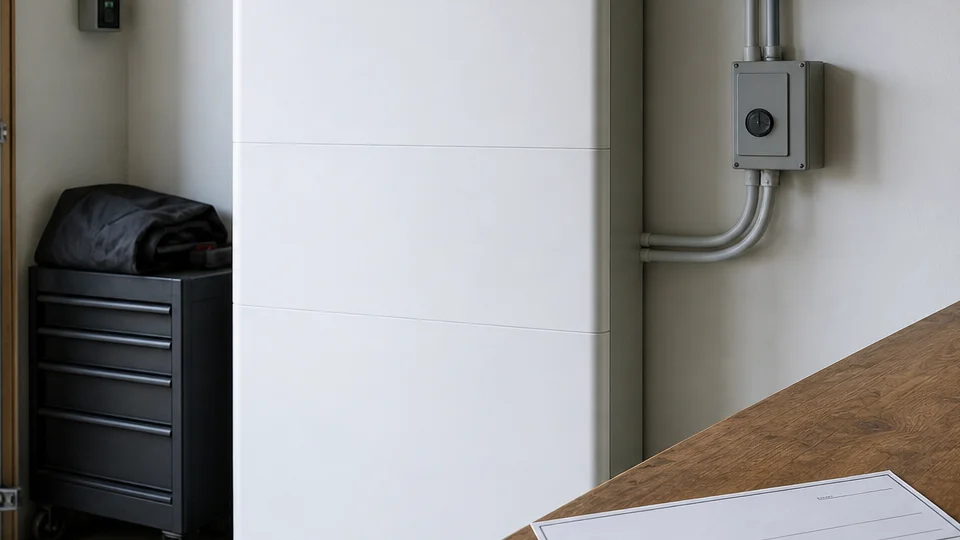
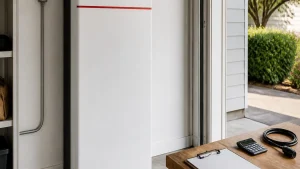
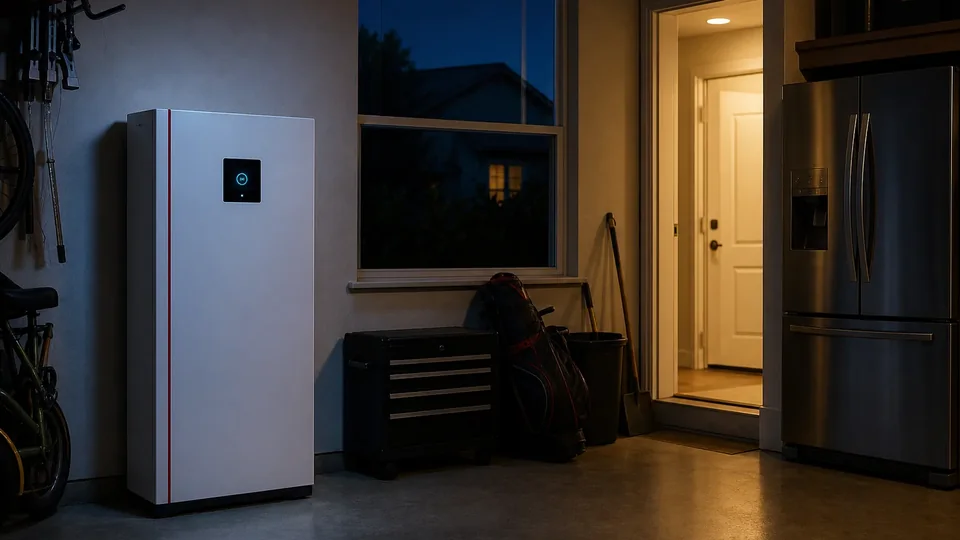
This single decision outweighs everything else on the page. An indoor utility room holds a steadier temperature than a detached garage. A wall shared with the house stays warmer than an exposed external wall.
An optional IP54 rating widens the choice to sheltered outdoor positions, which suits some sites. It does not turn a cabinet into a wet-room product.
Our guide to installation location covers clearance, damp and flood risk in detail.
Four Practical Steps for the Cold Months
First, treat a temporary dip as normal rather than a fault, and check the numbers again in spring before drawing conclusions. Second, keep the enclosure clear of snow and stored items, because airflow still matters in cold weather. Third, if the system protects itself on the coldest nights, confirm that the backup reserve covers your essentials. Fourth, log the winter throughput, because a full year of data is what makes a fair comparison possible.
If winter performance matters a great deal to your site, the selection guide explains how capacity and form factor interact with installation position.
What to Ask Before You Buy
Ask for the operating temperature range, not just the storage range. Ask whether the battery management system warms the cells before charging at low temperature, and at what temperature it stops charging altogether. Ask what the low-temperature charge protection is set to.
Those three answers tell you more about winter behaviour than any headline capacity figure. Our resources page lists the published specification for every model, including rated currents and cycle life.
Tell us where you plan to install the battery and how cold your winters get. We will confirm what to expect month by month, rather than promise a figure that only holds in summer.
Planning a battery for cold-winter use?
Tell us where the battery will live and your winter loads. Our engineers check the installation temperature and confirm the usable capacity your home needs in January.
- Installation room or garage, heated or not
- Lowest winter temperature at your site
- Loads that must stay on in a blackout
Prefer email? Write to admin@rdsmod.com