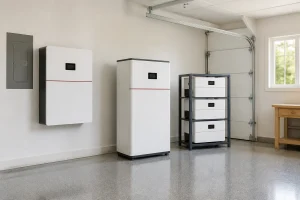
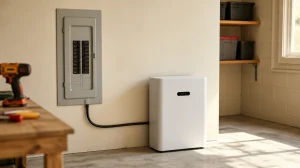
When you source home batteries from Chinese factories, three numbers decide the deal: minimum order quantity (MOQ), lead time, and cert status. This guide gives you typical ranges, a 15-point checklist, and the cert table that installers and dealers use before they pay a deposit.
None of the figures below is a quote. They are typical ranges seen across public battery supplier pages and order flows in the home LiFePO4 market. Because every factory builds orders its own way, treat these ranges as a yardstick. Then check each number in writing for your own order.
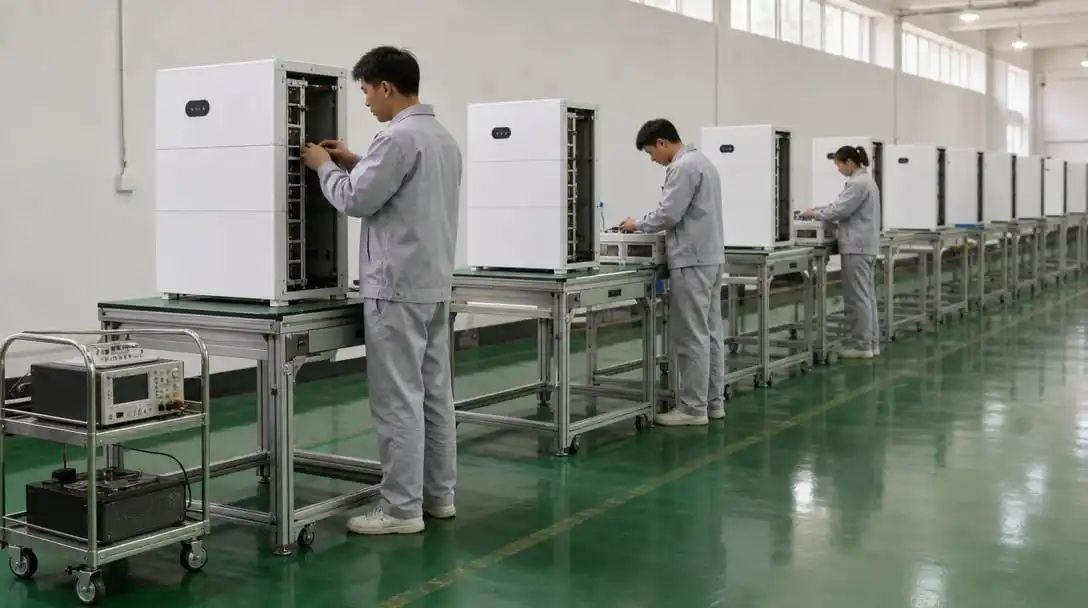
How to Source Home Batteries from China in 2026: The Numbers That Matter
Three figures do most of the work in any battery supplier talk. First, MOQ decides whether your first order is real. A sample order protects your quality bar. A standard order tests your logistics. A private-label order tests the factory’s true output. Because each step adds tooling, labels, or firmware work, the MOQ climbs with the service level.
Second, lead time decides your cash flow. Home LiFePO4 systems take longer than small devices, since cell buying, BMS setup, and safety testing all sit in the path. In practice, a Chinese battery maker that promises two weeks for a private-label unit either stocks finished goods or will slip the date.
Third, cert status decides whether the product can sell in your market. A battery without UN38.3 cannot ship by air or sea under normal terms. A battery without UL 9540 has a hard time passing grid and insurance review in the US. So check the certs before the price, every time you import home batteries.
Typical MOQ and Lead-Time Ranges for Chinese Home Battery Factories
The table below shows the order types you will meet when you import home batteries from China. The values are mid-2020s market ranges, not a quote. Confirm each line in writing before you commit.
| Order type | Typical MOQ | Typical lead time | What it includes |
|---|---|---|---|
| Sample order | 1–2 units | 2–4 weeks | Factory-standard unit, full inspection report |
| Off-the-shelf standard | 5–20 units | 3–6 weeks | Standard enclosure and BMS, your labels optional |
| Light OEM (label, packaging) | 20–50 units | 4–8 weeks | Your brand on the box and manual |
| Full private label | 50–200+ units | 6–12 weeks dev + production | Enclosure, BMS firmware, comm protocols |
Two factors move these ranges. When a factory buys cells from a top cell maker on the spot, standard orders run fast. When it uses cells from a prior batch, lead time drops. If your order mixes cell type or form, add time, since a line reset takes a week or more. This holds for every home battery supplier you bench against.
The 15-Point Checklist to Verify a Home Battery Factory
Run this list on any Chinese battery maker you contact, including ours, before you sign for a home battery order. Each item takes a day or less, and together they split a maker from a trading company.
- Business license and years in business — check it yourself, not via the website.
- UL 9540 for the US home market — ask for the report number and check it in the UL product iQ database.
- UN38.3 test summary — the shipping must for lithium cells; UNECE posts the 38.3 test rules.
- IEC 62619 — the industrial lithium safety standard, a good baseline sign.
- Cell source — who makes the LFP cells inside, plus match data for that source.
- BMS ownership — in-house or bought in, and the firmware update policy.
- Cycle life at your conditions — “6,000 cycles” means nothing without its discharge depth, heat level, and C-rate.
- Warranty terms — years, the keep-rate line, and what voids coverage.
- Sample policy — is a paid sample credited against the bulk order?
- Pre-shipment check — is SGS or BV accepted before the balance payment?
- Reference customers in your market, with a live contact.
- An English-speaking engineer on the team, not just sales.
- Tooling and mold ownership for private-label orders.
- Payment setup — deposit share, balance against the bill of lading, or trade assurance.
- Written scope of the quote — battery alone, or system with inverter.
The Four Certs Every Home Battery Must Show
Four papers do the heavy lifting for any home LiFePO4 system. Keep the rest as backup.
| Cert | What it tests | How to check | Why it counts |
|---|---|---|---|
| UL 9540 | System-level safety, fire test included | Report number, checked in UL product iQ | The US standard for home battery systems; grid teams and insurers ask for it |
| UN38.3 | Shipping safety: altitude, heat cycle, vibration, impact, short | Lab test summary; UNECE posts the rules | Needed to move lithium cells by air or sea |
| IEC 62619 | Industrial lithium safety under set stress tests | Cert plus test report | The base safety standard for most EU listings |
| ISO 9001 | The factory’s quality system, not the product | Cert body and scope | Shows each unit’s process is on record |
One red flag shows up a lot: a cert for one model while you order another home battery. Ask for the exact model on the cert, and match the part number to the unit you get. If the numbers differ, that cert does not protect you.
Sourcing Mistakes That Cost Installers and Dealers Money
First, you compare a battery-only quote to a system quote on one home battery. The gap between a bare pack and a pack with inverter and cable runs wider than the brand gap. Force the same scope from every supplier.
Second, you take cycle-life claims with no conditions. The number only counts with its discharge depth, heat, and charge rate, so ask for the test protocol, not the headline.
Third, you pay the balance before a pre-shipment check. A third-party look takes one day at the factory and finds label, box, and serial errors a photo miss. In short, the best check after the sample is the day before ship.
FAQ: Sourcing Home Batteries from China
What is a typical MOQ for home batteries from China?
Samples run 1–2 units. Standard orders run 5–20. Light OEM runs 20–50. Full private label usually starts at 50–200, based on how much the factory changes. Put the number for your setup in writing.
How long does a home battery order take to make?
Usually 2–4 weeks for a sample, 3–6 for standard, and 4–8 for light OEM. Full private label adds 6–12 weeks of dev work before the build. The date rests on cell stock and the test queue at the factory.
Can I get a sample home battery before a bulk order?
Most factories sell paid samples, and many credit the cost against your first big order. The sample is the cheapest quality check you will ever buy, so order one before you go to volume.
Which certs should a home battery have for the US market?
For US home use, UL 9540 is the bar. UN38.3 is a shipping must. IEC 62619 backs EU and export listings. Ask for report numbers and check them yourself — a photo of a cert is not proof.
How do I tell if a Chinese battery maker is solid?
Run the 15-point checklist above: license, cert report numbers, cell source, BMS ownership, live references, and a written quote scope. If a maker pushes back on any item, treat that as the answer.
How do I get RUIDASIMAI’s current MOQ, lead time, and sample terms?
Send us your target size, unit mix, and market for the home battery you plan to sell. We confirm current MOQ, lead time, and sample terms in writing, and we answer cert questions with report numbers you can check. A third-party pre-shipment check fits most orders — ask about it before the balance step.
The Bottom Line
When you source home batteries from China, you buy trust in three steps: the sample proves quality, the cert proves safety, and the written terms prove the factory means what it says. Run the checklist on every candidate, keep quotes on the same scope, and let the numbers do the compare.
To see how the numbers feed the math, read our home battery payback period guide. To size the system right, our home battery capacity guide walks through the 5, 10, and 16 kWh choices. For the cell choice, LFP versus NMC covers the six key differences. And for the finished match-up, our best home batteries of 2026 ranks the seven systems by installed cost.
RUIDASIMAI is a home battery maker in China, building floor, wall, and stackable LiFePO4 systems. We share our own MOQ, lead time, and cert papers on request — run the checklist above on us.
Verifying Genuine Cells Before You Pay
Cell claims are easy to write and hard to check, so verify them while the order is still negotiable. Work through these items in order and put the results in the purchase contract.
- Cell model and lot number. Match the cell model printed on the cells against the model named in the datasheet, and record the lot number before assembly.
- Manufacturer test report. Ask for the capacity and internal-resistance report for that lot, not a generic datasheet for the cell family.
- Traceability. Confirm the supplier can trace a finished pack back to the cell lot, and say so in the quality agreement.
- Label versus specification consistency. Compare nameplate voltage, capacity and current ratings with the specification sheet line by line.
- Sample teardown. Cut open one sample from the first production run and inspect busbars, nickel strips, insulation and cell wrapping.
- Independent inspection. Book a third-party pre-shipment inspection against the agreed specification rather than a supplier report.
| What a supplier can show | What it actually proves |
|---|---|
| Datasheet for the cell family | The cell exists with those ratings; not that your lot uses it |
| Certificate for one model | That model and build, not your configuration |
| Capacity test on a sample | One unit, unless the test method and lot are recorded |
| Lot record plus pack serials | Traceability you can enforce after delivery |
Factory direct
Want our current MOQ, lead times, and certifications?
Send us your target order size and market. We confirm MOQ, lead time, and sample terms in writing, and we answer certification questions with report numbers you can check yourself.
- Target order size and unit mix
- Your market and required certifications
- Any private-label or branding needs
Prefer email? Write to admin@rdsmod.com